Serving Bismarck, ND and surrounding areas. (701) 299-5558
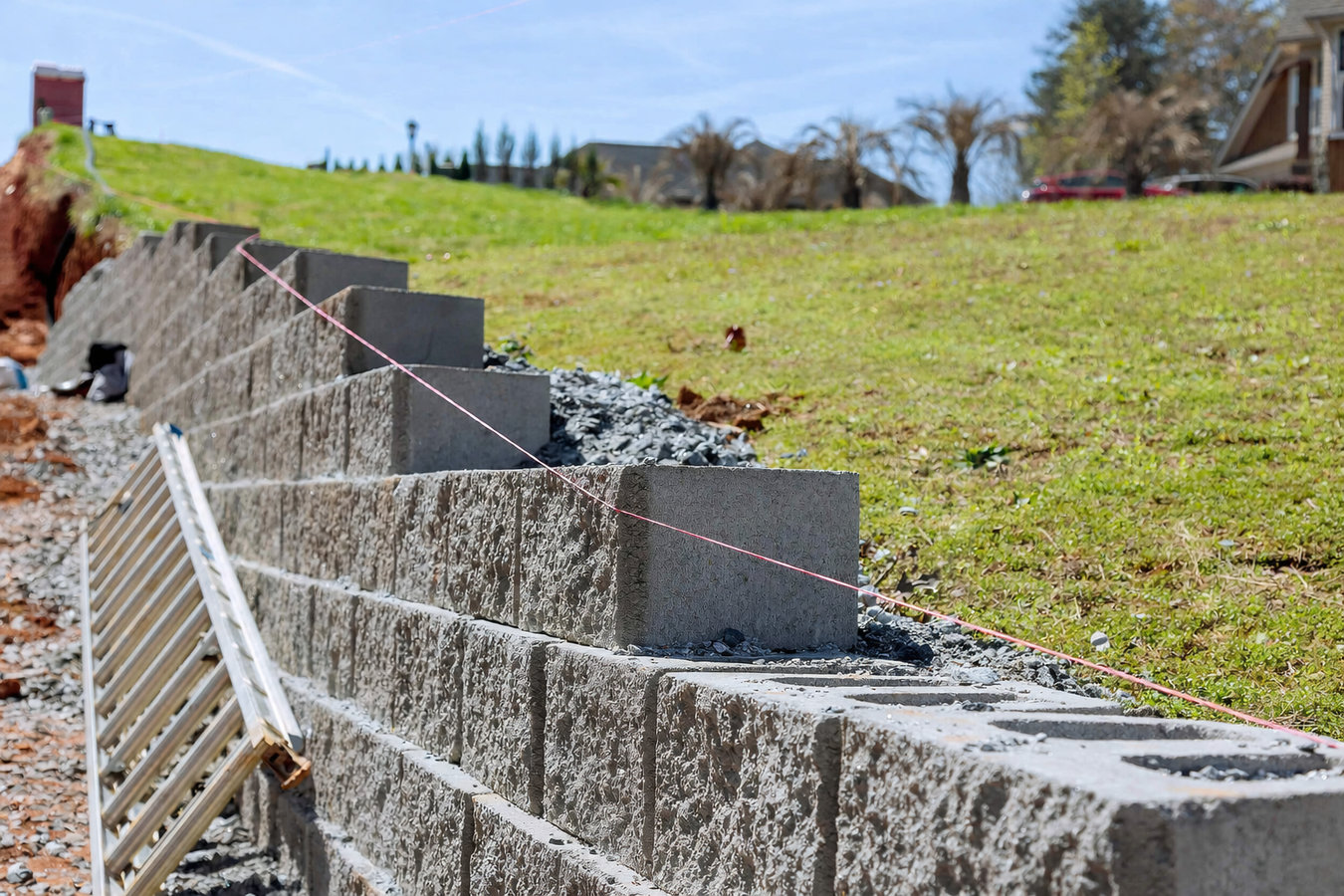
If your slope is eroding, your old timber wall is rotting, or water keeps pushing toward your foundation, we build retaining walls in Bismarck with the drainage and frost-depth foundations that actually hold.
Retaining wall construction in Bismarck, ND holds back soil on sloped or uneven properties using foundations set below the frost line and drainage built into the wall from the start - most residential projects are complete in one to five days depending on wall size.
A retaining wall is a permanent structure, not a landscaping accent. It keeps your yard where you want it - preventing the slow erosion, soil sliding, and water misdirection that can eventually reach your driveway, fence line, or foundation. If you already have erosion issues affecting a larger area of your property, our masonry restoration service can address damaged surfaces that have suffered from the same water and soil movement problems.
Bismarck's clay soils and dramatic freeze-thaw cycles make drainage behind the wall more important here than almost anywhere else. A wall without proper drainage behind it fails under pressure - and in a wet spring, Bismarck can produce a lot of pressure fast.
Bare patches on a slope or soil collecting at the bottom after rain mean your land is eroding. Bismarck spring snowmelt and summer storms accelerate this quickly on clay-heavy ground. Left alone, erosion can undermine a driveway, a fence line, or the ground near your foundation.
A retaining wall tilting away from the slope it holds is under more pressure than it was designed for. This is especially common in Bismarck after a wet spring when saturated clay expands and pushes hard. A leaning wall will not fix itself, and the longer it is left, the more damage can occur behind it.
Standing water against your house or garage after a storm often means your yard is directing water toward your home. Bismarck's rapid spring thaw can send a lot of water across a yard fast. A properly built retaining wall combined with good drainage redirects that water before it becomes a basement problem.
Older wood walls common in Bismarck homes from the 1970s through 1990s have a limited lifespan. If the wood is soft, crumbling, or the wall is separating at the joints, it is past repair. Replacing it now with a more durable material is far less expensive than dealing with the soil movement and landscaping damage after a full collapse.
We build retaining walls from the foundation up - excavating below the frost line, setting the base course, constructing the wall course by course, and installing the gravel backfill and drainage pipe that makes the whole structure last. We work with concrete block, natural stone, and poured concrete depending on your budget, the wall height, and how you want it to look against your property. Every wall includes the drainage layer - that is not optional. If your project also involves a driveway or paved area near the wall, we coordinate with our masonry restoration work to address any existing surface damage at the same time.
For yards where the problem involves a combination of soil retention and structural support - for example, a slope near a foundation or a grade change adjacent to a parking area - we also offer concrete block walls as part of a more comprehensive solution. We handle the permit process with the City of Bismarck when the wall height or placement triggers a permit requirement.
Suits homeowners who want a durable, low-maintenance wall that handles Bismarck's freeze-thaw pressure and clay soil movement over decades.
Suits homeowners who want a wall that blends into a natural landscape or complements an older Bismarck property with stone or masonry character.
Suits homeowners with a failing wood or railroad tie wall that needs to be replaced with a longer-lasting masonry or concrete block structure before full collapse.
Suits homeowners whose primary problem is water management - slopes directing runoff toward a foundation or areas where pooling after snowmelt is a seasonal issue.
Bismarck sits in one of the most demanding climate zones in the country for any structure that goes in the ground. Winters regularly drop well below zero, the ground can freeze several feet deep, and spring brings rapid snowmelt that saturates clay soils already prone to movement. A retaining wall that is not founded deep enough will heave and shift within a few seasons. One that lacks proper drainage behind it will eventually crack or lean outward as saturated clay pushes against it year after year. Those are not hypotheticals - they are what happens to walls that were built without accounting for Bismarck conditions specifically.
Homeowners in Mandan and those in Washburn face similar clay soil and freeze-thaw conditions, and the same design principles apply. Whether your property is on the bluffs near the Missouri River or in a flat south-side subdivision, the wall's drainage and foundation depth matter far more than the material you see on the surface.
The City of Bismarck Building Inspections division handles permit requirements for retaining walls above a certain height. The Mason Contractors Association of America sets professional standards for masonry construction that we follow on every project.
We reply within one business day and schedule a free on-site visit to look at your slope, soil, and drainage before quoting. You get a written estimate that covers materials, labor, drainage, backfill, and any permit fees - no surprises at the end.
If your wall height or location requires a city permit, we file the application and manage the inspection. Permit processing typically adds a few business days to the schedule - and it means your work is on record and protected if you sell the home.
We dig the base of the wall deep enough that the foundation sits below Bismarck's frost line - the part that keeps the wall stable through hard winters. This is the noisiest and most disruptive part of the project and the most important step for long-term performance.
We build the wall course by course, installing gravel and drainage pipe behind it as we go. Once the wall is complete, we backfill, grade the soil, and clean up the site. Most residential walls are finished within one to five days depending on size and permit requirements.
Free site visit, written quote including permits and drainage. We reply within one business day.
We do not build to the minimum depth - we go deep enough for Bismarck's winters. A wall that heaves and cracks after two seasons is a waste of your money. Every wall we build starts with a foundation that accounts for how far the ground freezes here.
Every wall we build includes gravel backfill and drainage pipe behind it. Bismarck clay soils and wet springs create real hydrostatic pressure, and a wall without drainage behind it will fail. We do not skip this step regardless of project size.
Navigating the City of Bismarck's permit requirements adds time to the project but protects you legally and when you sell. We file the application, manage the inspection, and keep you informed - the paperwork does not fall on you.
We have worked on properties throughout the Bismarck area - bluff-side lots near the Missouri River, flat south-side subdivisions, and older neighborhoods with decades of clay movement behind them. Local experience with our specific ground conditions matters more than general masonry skill alone. The University of Minnesota Extension publishes guidance on retaining wall drainage design for cold-climate regions.
The work that makes a retaining wall last in Bismarck is mostly invisible once the job is done - the depth of the foundation, the drainage layer, the base compaction. That invisible work is where we focus, and it is why walls we build are still standing and straight years later.
Restore deteriorating masonry surfaces damaged by Bismarck's freeze-thaw cycles and clay soil movement.
Learn MoreBuild structural concrete block walls for foundations, property boundaries, or combined retention and support applications.
Learn MoreBismarck's construction window fills up fast and the spring thaw is when failing walls show their worst - get your project on the schedule now.