Serving Bismarck, ND and surrounding areas. (701) 299-5558
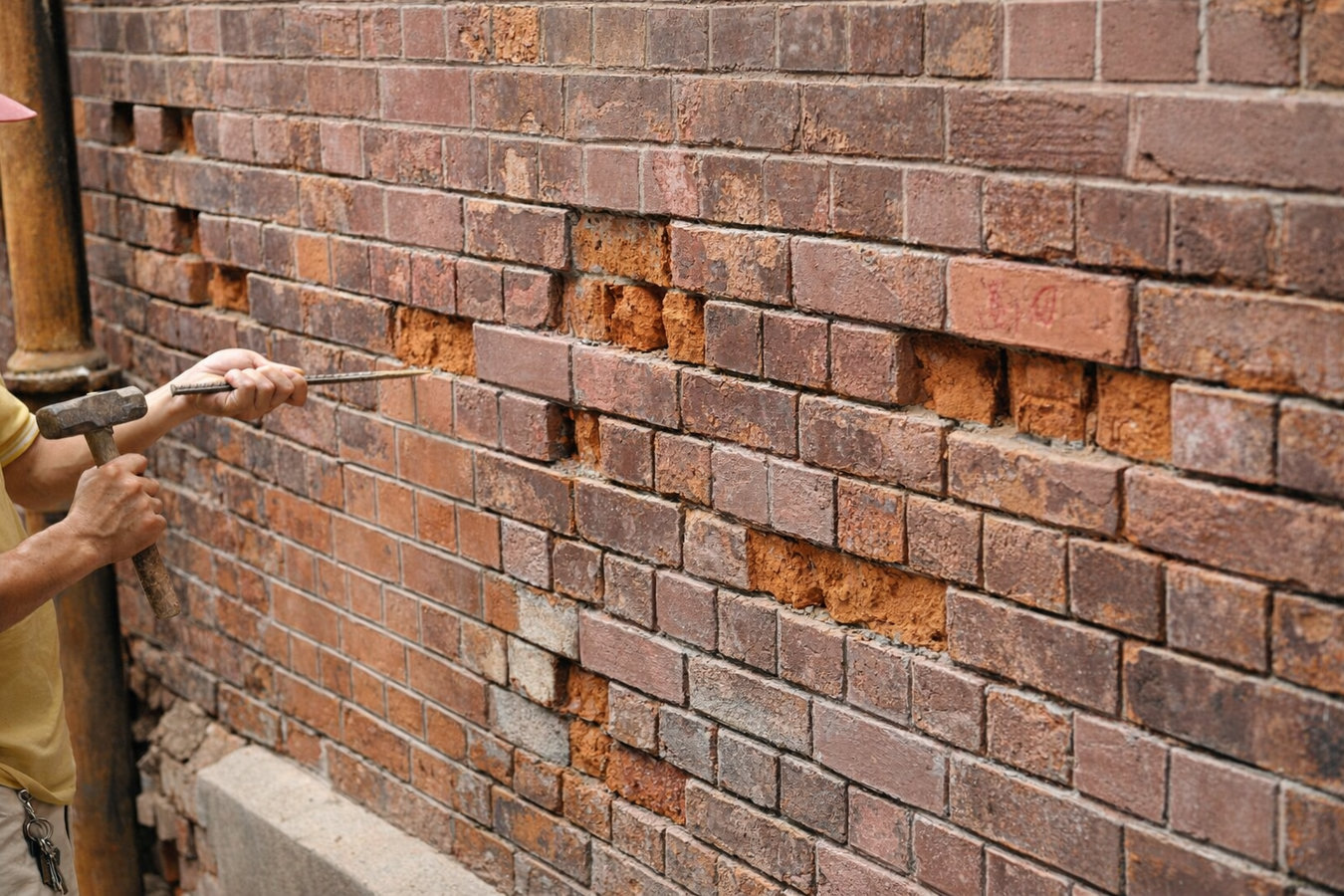
Cracked bricks and crumbling mortar give water a path straight into your walls. We find the damage, fix it right, and make sure it holds through a Bismarck winter.
Brick repair in Bismarck covers a range of fixes - replacing cracked or crumbling bricks, refreshing the mortar between them, and sealing gaps that let water in - most targeted repairs take one to two days and do not require tearing out large sections.
The mortar between your bricks is the part that fails first. It weathers faster than the bricks themselves because it is meant to. When it cracks or falls out, water works its way in and freezes, widening the gap with every cold snap. If you are also seeing joint wear across larger sections of wall, tuckpointing is often the right approach alongside targeted brick replacement.
Homes built before 1980 in Bismarck have had decades of freeze-thaw exposure. If the original mortar has never been touched, there is a good chance it needs attention - even if nothing looks obviously wrong from the street.
Press your thumb firmly against the mortar between two bricks. If it crumbles, flakes, or feels soft and sandy, it is failing. Mortar in good condition feels hard - almost like the brick itself. This is the single most reliable check a homeowner can do without any tools.
Cracks that travel diagonally along the mortar lines - following a stair-step pattern - often point to subtle foundation movement. In Bismarck, the clay-heavy soil expands and contracts with moisture changes, which can push walls slightly over time. This is worth a mason's assessment before the next winter arrives.
When the face of a brick starts to flake off in thin layers or develops a pitted, rough texture, the brick itself has been damaged by repeated freezing. This spalling is more common on the north and west sides of Bismarck homes, which take the brunt of winter wind and snow. Once a brick starts spalling, it will not stop on its own.
If you notice water stains, peeling paint, or a musty smell on an interior wall that backs up to exterior brick, moisture is getting through. Bismarck winters give water plenty of chances to find a gap and widen it. Interior moisture damage is a sign the repair has already been delayed longer than ideal.
Most brick problems homeowners notice fall into a short list: missing or crumbling mortar, cracked or spalling bricks, white mineral staining, and cracks that follow the mortar lines. Our repair work addresses all of them. When the mortar is the issue, we grind it out to the right depth and pack in fresh material matched to the existing color and texture. When bricks themselves are cracked or damaged, we remove them carefully and replace them with matching units so the repair blends in.
For homes with larger areas of mortar wear, we combine brick repair with our driveway pavers and broader masonry work so the whole exterior holds together evenly. We also address efflorescence - the white mineral streaking that appears when water moves through brick - by treating the source rather than just cleaning the surface. Fixing the symptom without fixing the water path just means the staining comes back next season.
Suited to homeowners whose mortar is crumbling or missing in sections but whose bricks are still in good shape.
Best when specific bricks are cracked, spalling, or loose while the surrounding wall remains solid.
For the north and west faces of homes that have taken repeated wind-driven snow and show surface brick deterioration.
Addresses the water pathway causing mineral staining on brick faces - treating the cause, not just cleaning the surface.
Bismarck regularly sees temperatures swing from well below zero in January to the 90s in summer - a range of over 100 degrees between seasons. Water trapped in mortar joints freezes, expands, and then thaws over and over, which is the main reason mortar deteriorates faster here than in milder climates. A small crack or a few inches of missing mortar might seem minor, but water is patient. Once moisture gets behind the brick, it can damage the wall structure, cause interior water stains, and lead to repairs that cost far more than catching it early. Homeowners across the region, including those in Mandan, face the same seasonal pressure.
The clay-heavy soils in and around Bismarck add another layer of risk. Clay holds water instead of letting it drain, and when it gets wet it expands - then shrinks when it dries out. That repeated movement puts pressure on foundation walls and can cause subtle shifts that show up as diagonal cracks in brickwork. Homeowners in Lincoln and similar nearby communities deal with the same soil conditions. The North Dakota State Climate Office tracks the freeze-thaw patterns that drive this kind of masonry wear each year.
We respond within 1 business day. You do not need to have all the answers ready - just describe what you can see. We will ask where the damage is, roughly how much of the wall is affected, and whether you have noticed any interior water issues.
We walk the affected area, check the mortar joints, brick condition, and any cracks or water staining. You will get a clear explanation of what we found and a written estimate before any work begins. We will not push you toward more work than you actually need.
We grind or chisel out the damaged mortar or remove broken bricks, clean the joints thoroughly, and pack in new material. This is the noisy part - expect grinding tools for a few hours. The work area stays contained with very little mess beyond some dust near the wall.
When the job is done, we walk you through what was repaired and what to watch for. New mortar needs 24 to 48 hours before it gets wet. In Bismarck's climate, we may recommend a follow-up check the following spring to confirm everything held through the first freeze season.
We respond within 1 business day - no obligation, no pressure. Once you submit, someone from our office will call to schedule a free on-site estimate at a time that works for you.
Using the wrong mortar mix in a climate that swings 100 degrees between seasons can cause a repair to fail within a year or two. We select materials suited to Bismarck's freeze-thaw conditions so the work lasts - and you are not calling for the same repair again in three years.
Bismarck's prevailing winter winds push snow hard against the north and west faces of homes. We prioritize those exposed sides when diagnosing damage, so the whole exterior holds together evenly instead of one side deteriorating faster every year.
A lot of homeowners in Bismarck worry about being told they need far more work than they actually do. We give you an honest look at what is damaged and what is fine - so you pay only for what your home needs.
We work from the same technical guidelines that govern quality brick repair nationwide. The Brick Industry Association's standards cover mortar depth, joint profiling, and material selection - the details that separate a repair that lasts from one that fails in a season.
Brick repair done correctly is invisible - your wall looks well-maintained, the joints seal out water, and you go into winter knowing the damage has been addressed. That is the standard we hold ourselves to on every job in Bismarck and the surrounding communities.
Bismarck's freeze-thaw cycles damage driveways just as fast as brick walls - paver repair and replacement restores curb appeal and function at the same time.
Learn MoreWhen mortar wear covers large sections of wall rather than isolated spots, tuckpointing addresses the full scope more efficiently than targeted brick repair alone.
Learn MoreBismarck's working window runs late April through early October - call Bismarck Concrete & Masonry now and get on the schedule before the summer books up.